Scott’s Top 10 & Market Update

Last year the 2009 predictions were that foreclosures would slow, loan modifications would be more acceptable to banks, adjustable rates will go lower as the Fed continues to lower its rates….conventional arms did not go down…new home sales flat…wrong, prices came down, new home sales went up, builders did consolidate offices, etc. most builders are not doing design centers, but back in basements selling like they use today, more offices will consolidate and merge..Yes. More agents will leave the business…that is correct…88% renewal rate in 2009, 9200 agents at NVAR now, down from 11,000. Prices did not remain stable, but Gateway did grown and expand.

So he was 8 out of 10, so that’s not so bad.

This year, Scott’s predictions are

House values stable below $400,000. More people are saving and not planning on moving unless they have to. More agents will leave the business as it becomes more specialized. If you don’t know the process, ex. Short sales, they will exit the business.  Foreclosure activity will increase, but anything that comes up will be absorbed quickly due to the pent up demand. It will increase, but there won’t be a huge influx of properties coming on the market. They are getting absorbed if they are priced right according to Kent Eley.

Short sale inventory will greater than foreclosure activity. You have to get your head out of the sand and do them and not avoid them. It’s the nature of the business.

More will go “green”. Get your green designation today. More real estate offices will merge or close their doors especially the boutique businesses.

Unemployment should rise through late in the third quarter…it has to get better at some point. We might lose or gain some, but should stay at half of where we are nationally.

Social media…get on board.

Videos….they are the wave of the future.  They will replace virtual tours. Get a recorder and get on it.

Interest rates will rise due to the government backing out of MBS.

Prepare for what the future might bring, so you can act today for what might come going forward. Get into the mindset and prepare for it so when it happens you aren’t shocked or unprepared to handle it.

Who buys the MBS after the government? Foreign investors, big banks with large deposits are hopefully going to step up.  Why then? Government is buying and the yield spread isn’t there. Once they stop, the yield spread will increase and be more attractive to investors and banks to buy at that time.

Rate change…1 ½ percent increase…think Dave Stevens was right, probably won’t go straight up immediately, but it will get there.

Price drops…10% nationally, active properties on the market, less than 1%. 

Spencer….expecting drop as bad as 10% , increase of rates, end of tax credit, etc. first time home buyers and investors are driving the market right now that’s why they are thinking that 10% drop in price is accurate.

Chris…unemployment is going to be huge. People aren’t going to be moving due to no job, etc. economy is expanding, but until unemployment starts to change, nothing will change. No money to buys, etc. not below 9%. If healthcare is passed, it will be an even lower number.

Spencer…references Steve Fuller….lost more entry level jobs, builders are buying land, if the builders start building, then those jobs will be taken.

Brett… builders are building spec and they are going fast…can’t build fast enough. That’s a plus.

Scott…ex. 13 out of 36 houses since March, Camberly homes has sold in the $1.3 million price range.  Winchester is selling (4 sold so far) in Brambleton off of a model the same as model they are in and the people cannot see the lots.  Can’t see them, to them or feel them but people are still buying them. They are even seeing a house that they aren’t going to build on those lots.  Many similar sales situations to South Riding in the late 90’s are.  People bought without knowing the lot configuration with utility easements, etc.

Spencer…condos and FHA approval.  If they are approved…they will sell like hotcakes.   No more spot approvals on condos make approved projects more valuable.  Need to know and keep up with ever changing rules and regulations with FHA.

What is the target market for next year?  First time buyers but how many are there out there?  Investors – maybe.  What we really need is move up buyers…need to get consumer confidence back and the only way to do that is to get jobs back.  Question I –  how do we do that?  Many jobs won’t be replaced.  The term “jobless” recovery is too tough to happen or sustain.  Consumer confidence won’t come back until jobs come back.

Appraisal issues are still out there – not as bad as they were 6 months ago.  Must meet appraiser at property to avoid problems – bring comps, survey, home pricing wizard information, and feedback from agent

Fairfax County is going after flippers – making post inspections of properties, giving current owners amnesty and do inspections to see what improvements have been made to see if they pulled permits and did to code.  Somehow they will go after them for not “playing by the rules”.

It’s the Little Things That Make All the Difference

As I reflect on our Toys for Tots event Saturday, it made
me realize – it’s the little things that make all the difference.  We collected over 270 toys for
underprivileged children and those toys, no matter how small they are, will
make a huge difference in their lives. 
When we collected food and money to buy food for the Society of St.
Vincent de Paul and delivered a shed full of food to provide just a meal or perhaps
two to a family in need, you realize that giving just a little makes a big
difference.  Someone didn’t go to bed
hungry one night because of our efforts. 

How or what does this mean to you?  Take the time to do the little things for
others and you will receive more in return than you give.  You get satisfaction, pleasure and enjoyment
out of helping others.  In addition, it
gives you a more optimistic outlook in all that you do – and even a little more
confidence in yourself knowing that you have done a little more than the others
you encounter in life. 

Philanthropy is defined one way as a desire to improve the
material, social, and spiritual welfare of humanity, especially through
charitable activities.  It only takes a
little effort and a little time but it reaps big rewards – not just to you but
the others you touch.  Start to make an
impact in other’s lives and you will feel the difference it makes in your life.

How does this concept of doing the little things make all
the difference correlate to business?  Do
the little things everyday and you will see big results there as well.  Make one extra phone call to a past client to
see how they are doing.  Make one
additional call to a business to develop a new relationship for establishing
referrals for each other.  Write one more
note to let someone you know you are thinking of them.  Read one additional article, blog or magazine
in real estate to learn something new or reinforce a thought you may have on a
particular subject.  Attend one more
training, get another designation, or attend another seminar to learn a little
more than other agents.  Get in a little
earlier and work a little later. 
Basically just do a little bit more than the next person in the business
and you will reap more rewards more quickly. 
The law of reciprocity will take care of you – guaranteed!  Get it? 
Got it?  Good!

Now, go sell something!

Conversations with Dave Stevens from FHA

Profile[1].stevens

At RE/MAX Gateway, we strive to bring the most current information and speakers to our agents enabling them to rise above our competition.  This past Friday was no different.  Our office of just 90 agents was able to secure the Commissioner of FHA to speak one on one with me and answer all of our agent’s questions – as candidly as he could – and took nearly 2 hours out of his busy schedule help us understand the role of FHA and the direction it is headed to aid in our economic recovery.  As we sat down with Dave Stevensfrom FHA, we thought we would share some highlights from our conversation.

· Where do you get your info?  There is no number one source, market data is complied on a weekly basis.  His belief is that Realtytrac has ineffective data and their foreclosure numbers are way off. NAR’s numbers aren’t accurate either, so FHA scrubs data from different sources. SIFMAis one of those sources (a bond tracking market group on Wall Street that reviews mortgage data). Looking at bonds reflects mortgages that are securitized, they won’t count any other mortgages that aren’t securitized. The majority of mortgages are securitized with Fannie Mae as the servicer for all Fannie and Freddie loans. As a part of Dave’s plan, he wants to have more numbers up on the HUD website for everyone to see and use.  

· Information for policy changes depends on the policy. For RESPA, that change started in 2005 and took until 2010 to be complete, pass and get out to the public.  Sometimes they can happen more quickly as is the case with mortgagee letters.

· We have been reading about upcoming changes for mortgage brokers, what will these changes reflect? Lenders will need to be directly responsible to FHA for the loans they underwrite for brokers.  As it stands today, lenders have different guidelines for loans they originate for themselves and others that they originate for brokers.  So, at this time, brokers don’t underwrite or fund loan their own loans and therefore if someone defaults, it is on the US taxpayer to foot the bill on the defaults for loans they originate.  Today the guidelines to be FHA approved are:  a broker only needs $250,000 in net assets; only $67,000 needs to be in tangible assets; of the $67,000 only 20% of theses tangible assets need to be in cash – only $13,400. This change was proposed because brokers can’t back the loans they are originating, so when goes into default, who do they go after?  The taxpayer.  FHA wants to make sure that they can stand up to what the loans they are generating. 

· The world has no faith in our mortgage system right now. The Bank of China was the largest buyer of MBS (mortgage backed securities); basically they were buying our debt. The government had to step in and start buying because China has lost their faith in our system and stopped buying them.  They got burned from the foreclosures so many people had from the loose underwriting policies of lenders.  Not everyone should be a home owner – some need to be renters.

· So what are some other policy changes on the horizon at FHA?  Some noted changes that we will see in the coming months are…

o   Currently, the Streamline Refinance will allow you to refinance and give you a new fixed rate, no questions asked. No appraisal, no credit check and at 105% loan to value. In January, streamlined FHA Refinance’s will be full document loans with appraisals, etc. One of the reasons behind this is because a company, Fortress bought MBS and bought distressed assets, got them to perform, turned them into FHA loans, then streamline refinanced them and then went into default – with no recourse. Now, one true streamline refinance is left. It’s a refinance from balance to balance where the owner pays closing costs, etc. and it will stay in effect for a while. All other refinances through FHA will be subject to full document review.

o   Appraisals will see a new policy which takes the good parts of HVCC (House Values Code of Conduct) to create a new model. FHA would like to see more arms length transactions.   They are going to discontinue allowing the lender to order the appraisal because FHA feels they are too involved in the transaction as it is.  FHA is also working on shortening the term of getting another appraisal if a contract falls through and a new buyer purchases that home.  The new buyer will be assigned a new FHA case number and would not have to utilize the first appraisal.  Going forward, they would be able to get a new number and appraisal even if it’s within that 6 month window that is currently in place. Also, FHA is not mandating that lenders use an AMC (Appraisal Management Company) just the originator and appraiser cannot speak.  The lender could designate someone in their office to order the appraisals and that is acceptable with FHA. Additionally, the appraiser must know the local market in which they appraise.   There will not be a required mile radius for appraisers because of rural areas vs. suburban areas.  As agents we will also be able to deal with appraisal issues through dispute resolution which can be an issue for lenders who send appraisers without local knowledge and could result in litigation.

o   The capital reserves required for lenders to indemnify loans (loan loss) will go up to one million dollars immediately! Then $2.5 million in 2 years.  Again, 20% of that number has to be in tangible capital and even that number might change.  FHA wants lenders to have more skin in the game.  There will be more changes to come from Fannie, Freddie, etc. and for lenders who can participate with these programs will have to be more legit and have more money.

o   Brokers are not going to be approved by FHA.  They have no ability to pay for loans they originate that go into default. 

o   For Short sales, the Treasury Department and HUD have created a new process and it will take some time to figure it all out. There is a lot of concern with flips, unfair advantages of the system, etc.  These new guidelines roll out April 5th.  Dave is meeting with servicers on Monday to discuss these guidelines.  As we know, the government is pushing for loan modification.  Going forward, FHA will publish a scorecard monthly on how lenders are doing with loan modifications.  FHA is very concerned about moving distressed properties off the market while their main concern is keeping people in their homes.  Short sales guidelines discussion started in July.  FHA felt that we put too many people in houses who couldn’t afford them, now they have to do something to fix it.  Not every bank will sign up for the new program.  To see who is participating, a list of the banks that will be uploaded on the HAMP website.  A couple of large banks refuse to participate and they didn’t take tarp money, so there is nothing FHA can do to make them abide by the guidelines.  

We have heard about some policy changes at Fannie such as the increase in minimum credit scores and lower debt to income ratios, can you speak to these changes?

· Fannie is going to 640 min credit scores and FHA is going to follow suit shortly more than likely.

· 18% of borrowers with FHA loans are in default and FHA feels that raising the FICOscore will lower that default rate.  As of the beginning of 2009, the average FICO score of an FHA borrower is 693 and virtually none of those borrowers are in default. The previous problems in 2004-2008 was in the down payment assistance programs which caused $10.4 billion in losses going forward…it was a disaster. 

If 2009 programs are working, then why change now?

· FHA forecasters are concerned about a double dip in home prices. Home price forecasts that at a minimum there will be another 9-10% drop in home prices through the first quarter of 2010…nationwide. They are looking at current unemployment trends as a huge factor in determining this drop.  It has been forecasted to remain high and as such, we are looking at a jobless recovery. Surprisingly, 2009 has been the best quality book (year economically overall) in a long time.

· Scenario forecasting in a jobless recovery shows that you won’t get the home appreciation rates that you normally would. Growth is predicted at .7% over the inflation rate which is very low and will take several years to have housing prices come back to the levels they are today. They are looking for ways to make it work to avoid another bailout.

· The real estate industry will be a better industry once it’s all done with better lenders in business.  FHA is looking at the rent vs. own index, MSA (Metropolitan Service Area) by MSA, borrower behavior, etc. in order to make cautious decisions as we bottom out and experience a  slow recovery.  Some factors, if not approached soon enough, could have us go into a recession again.

So what’s next – with the extended tax credit, no more government purchase of MBS, there will be a raise in rates, fewer first time home buyers, and then a predicted foreclosure release in the second quarter of 2010?

· Dave said there is an expected ¾ to 1 ½ point rate increase when the Fed backs out of the market (the Fed has already spent $1 trillion and has committed to spend a total of $1.4 trillion).  At this time the government is not buying Ginnie Mae MBS as they are selling verywell in foreign markets. China continues to waitand doesn’t want to start buying again until we decide what we are going to do with Fannie and Freddie. If the government doesn’t continue to purchase MBS, then the MBS will become worthless.  Banks who have huge deposits with no loan demand and may possibly start buying MBS to offset their deposits.  When the Fed pulls out, we will feel an immediate effect of an increase that is expected to be 300-600 basis points above current interest rates which equates to .75% to 1½% in rate increase.

· Before the Fed bought MBS, rates were up 1 ½% above where they are today , so they think that will be the premium to get investors to start purchasing MBS. Currently, we are totally dependent on foreign capital to keep our housing market afloat and America is bankrupt in that department.

· The tax credit is the single biggest expense of the government.  The government stimulus is an artificial growth for the economy.  A lot of people in the government want out of helping the housing market.  They feel they have done enough.  By slowly pulling out of purchasing MBS and discontinuing the tax credit, the housing market should be able to sustain itself.

· If the Chinese economy starts to take a downturn, the first asset they are likely to sell will be US Treasuries and then we’ll really feel it because currently they are the largest buyer of US Treasuries!

· There is a legislative cap of $1.4 trillion for the rest of MBS that the government will buy and they might hit that cap before the program is phased out.  

· So Dave’s advice for Realtors is to be prepared and look forward for what is going to happen, keep growing, invest in your business, get back to basics, don’t deal with uncontrollable and drive forward.

· The government has no money, social security will run out on paper, but the money is already spent. In order to buy these MBS, they have to sell debt; the more debt auctions will drive prices up, so have to drop the price for debts and treasuries which would almost equal the cost for the debt. The spread will have to be there or it’s not good for taxpayer.

· Dave’s big concern is about the disadvantaged as well as sustaining safe housing for all.

· FHA’s HAMP loan modification program, where they tack the excess loan balance due to the back of loan and adjust the payment to a level to a level they can afford, has a 96.6% success rate for no defaults. The majority of the distressed market is due to cultural and language barriers. Dave’s asked for a budget of $75 million for next year to add more counseling services in distressed communities.

· Hardship will be a big factor in the new short sales guidelines. Too many people are taking advantage of the process which is a moral hazard.

· Condo approvals will be more stringent. They will have a permanent policy in place soon and currently have a temporary policy in place.

In closing….

FHA needs to back out of the market and get back to why it was created; Freddie and Fannie can’t be government owned forever and a lot of work has to be done in the process.

Anyone who predicts the future is wrong, homeownership=community stability.  Agents are the key to this recovery. They did it all wrong and the only way to get out is with the real estate agent.

We need to get faith back in the system. Safe act for loan officers, RESPA changes, etc. are just the beginning of the changes that have to take place to stabilize the industry.  

Finally, be excited about the work you do and remember, you are key to the economic recovery.

The Market from ALL Angles

Another successful RE/MAX Gateway Real Estate Exchange


I was at a lunch with business leaders across the Washington Metropolitan Area and we discussed various challenges we were having within our businesses and what our opinions were on what was to happen going forward into 2010 – here is what we discussed:


First and foremost, everyone is blessed to be in DC – others around the country are bleak with no hope. 


  • People at Rosenthal Automotive are concerned about economy
    • November was a really bad month for car sales – feels like November in first two days of December


  • Mike Jacoby at Broad Street says the commercial real estate market is flat and will stay there for the next few years.  One bright spot is that the Route 28 corridor’s vacancy rate had dipped.


  • Johnson and Strachan, the insurance company is taking a hit because of the following areas:
    • Renewals / expiration vales are down – payrolls are down, valuations on companies are down, house values are down so their revenues as a result are down. 


  • UBT – a copier sales and service team say in their opinion the economy is flat/stable – not terrific just like their business but they expect slight growth anticipated in 2010


  • Roofers are on a roller coaster this year but will probably be down at year end – the market is a race to the bottom in pricing but they remain cautiously optimistic.  John Francis on NVRoofing believes it will be a long recovery over the next 5 years. 


  • Jeff Nay of Sandler Training say there is still a lot of business is out there – need better skills and better systems to eat others lunches today.  Get educated and trained and you will survive in today’s market – especially in D.C.


  • Derek Coburn of Washington Financial Group who specialize in wealth management – money is in Bonds – not Stocks right now they are not afraid the market will crash and that the market will come down.


  • RE/MAX Gateway spoke about the following topics:
    • Inventory is down
    • Buyers are there but $$ are down or flat
    • Tax Credit for Home Buyers was extended
    • MBS end in March
    • HVCC is keeping $$$ down
    • Foreclosures are hitting market 2nd Quarter of next year
    • FHA raising down payment requirements this year from 3% – 3.5% and perhaps to 5% down next year
    • Credit is tightening up
    • If we continue to lose jobs it’s important to keep in mind that every 6 job lose results on 1 foreclosure.


Next year will be an interesting year in residential real estate with the Government getting out of purchasing Mortgage Backed Securities, the Home Buyer Tax Credit ending, and a supposed flood of foreclosures coming on the market the second quarter next year and the impact that will have on housing prices.  Stay tuned!


We then introduced Keith Barrett of Champion Title & Settlements, Inc. to discuss the new regulations going into effect April 5, 2010.


General Short Sale Guidelines under HAFA


Overview


Eligibility for Home Affordable Modification Program (HAMP):

1. Property is borrower’s principal residence

2. First lien mortgage originated on or before Jan 1, 2009

3. Mortgage is delinquent or reasonably foreseeable

4. Unpaid principal balance less than 729, 750

5. Mortgage payment exceeds 31% of gross income


Not guaranteed but must be in place


In the event modification process above does not work out, every potentially eligible borrower must be considered for Home Affordable Foreclosure Alternative (HAFA)


The percentages of loan modifications that default are greater than successes where people remain in their homes – there is a huge opportunity here folks!!


General Information:


Effective date April 5, 2010


Servicers must execute participation agreement for non-GSE Mortgages prior to end of the year.  If already participating, must follow HAFA guidelines.


Servicer has 30 days to contact borrower regarding short sale or deed in lieu


Borrower then has 14 days to respond


Prohibits servicer from reducing commission as stated in listing agreement


Doesn’t protect settlement companies and their fees – it’s unfortunate.


Suspension of foreclosure while under consideration for short sale


Short Sale Agreement under HAFA:


Termination date of not less than 120 calendar days after agreement signed


Agreement is available on line


Release of liability for borrower for cancellation of default


Allowable transaction costs


Roles and responsibilities of servicer and borrower, upkeep of property, pay a portion of their monthly payment until closing.


Borrow must submit offer/request for short sale approval within 3 days of receipt. Servicer has 10 business days to approve/deny short sale from when contract and request for short sale approval submitted. At this time, we are not aware of any penalties given if there is no response by bank by the deadline.


Incentives:


$1500.00 for relocation expenses paid to borrower


$1000.00 paid to servicer


Investor paid $1000.00 for allowing up to $3000.00 to be paid to subordinate lien holder, which lien holder must forgive the debt and release liability


Again, there is opportunity here – don’t miss out!


We had discussed if the government had given everyone $100,000.00 vs. bailing out everyone would be in a better position today versus the situation we are in today with all of the debt the government is in.


Inventory levels continue to shrink:

5,074 Active resales in Northern Virginia

1.9 month supply of homes

1.9 month supply of rentals


Our market is strong for sellers with equity!  Get them on the market today.  Get it?  Got it?  Good!


Now, go sell something!

Now is the Time…

Now is the time for innovation and creativity.  As our market continues to change it is even
more critical to look at how you are running your business and determine where
you are getting results.  Additionally,
you should look at others and see how they are getting results.  Analysis of your business as well as your
competition’s should be an ongoing practice for you to grow and thrive in any
market.

Areas that you should be considering are:  How are you marketing?  How are you expanding your database?  How are you attracting new business?  How can you grow your business?  Are you educating yourself? Let’s review
different options.

From a marketing perspective, have you embraced social
media?  What are you doing to use this
venue to market yourself, your listings and obtain new business?  What are other venues that are available to
get you results?  Do you utilize drip
marketing campaigns to your sphere and new additions to your database?  Are you offering seminars to your clients and
the public?  Seminars you ask? Yes – home
buyer seminars, tax credit seminars, now – move up buyer seminars, investor
seminars, short sale seminars, and there can be more – innovate and create!

How are you expanding your database?  Are you working business to business avenues
to grow your database?  Are you involved
in BNI or other business development groups?  Are you involved in associations such as
alumni, exotic cars or other areas of interest you may share with others?  Do you have the ability to invite people to
subscribe to your website to get market updates like Listingbook offers?  Are you giving back to the community?  Are you involved in a charity?  Have you started a food drive, coat drive,
book drive, or Toys for Tots campaign to help others…get creative and get in
front of others to grow your database!

How are you attracting new business?  We spoke about seminars in the marketing
section but have you offered anything else “free”?  Educate yourself and then educate others.  Also, think of other avenues to create
opportunities for yourself.  Offer a free
home warranty when you buy or sell a home through you or your team, offer free
staging when you are utilized to sell a house, or a free home energy analysis
to your sphere or anyone they know, or anything else like this you can think of
to make your phone ring?  What if you
offered a reduced commission when you sell your home and buy a new one through
you type of marketing campaign?  Get the
word out on what you are doing to get new business – it is out there but you
have to go get it – it won’t come to you!

How is your business growing?  Have you considered starting a team?  Have you thought about merging with another
team or perhaps acquiring one?  There is
a lot of talent out there just needs direction to be successful in this
market.  Do you have systems and
processes in place that can help others grow? 
Are you generating leads that you can’t handle?  Start a referral network if you are in this
situation – don’t lose these extra opportunities.  Are you partnering with your vendor partners
or business associates to offer incentives to your clients and theirs to create
new opportunities?  Are you writing
reverse testimonials for each other?  Are
you looking of opportunities in the market to grow your business in this
way? 

Are you educating yourself? 
If so, how?  Are you obtaining
designations?  Many agents put their head
in the sand and say they won’t do short sales or foreclosures.  Well, they are here to stay and will be for
the next few years so get a designation such as CDRS so you can handle them more
effectively and efficiently and to learn more about the process to determine if
you should work with the agent on the other side of the transaction.  As the world gravitates towards social media,
perhaps you should earn your E-Pro
Certification Designation.  If you have
always been a listing agent and you see the benefit of working buyers or you
see the first time buyer market as a viable market for you – get your ABR.  Are you attending seminars?  If you attend seminars – are they varied or
are you only going to hear one speaker? 
Are you reading publications, blogs, attending conventions, trainings,
mastermind groups, etc or are you just maintaining the status quo as far as
your educational development is concerned? 
The best way to innovation is through education.

As you can see, if you are creative or innovative, you can
come up with ideas that are better than these or expand on the ones
presented.  You need to take the time to
analyze opportunities that are out there. 
Also, speak with other industry leaders in the business and see what
they are doing or what they hear others are doing to grow their database,
market themselves and their teams, how they are attracting business and growing
their business.  Also, conduct your own
research on line, read publications, attend your Realtor association events,
attend builder events, etc. to learn more about your competition and how they
are growing or more importantly, not growing in today’s market.  Basically do something!  Get it? 
Got it?  Good!

Now, go sell something!


A Perfect Storm

I was
recently interviewed for the
Washington Examiner newspaper about the extension of the tax credit of home
buyers – here is a synopsis of our discussion:


The
extension of the home buyer tax credit will definitely spur housing sales and
here’s why.  It brings into play move up buyers as well as extends the
first time buyer credit.  On the move up buyer side, you have to have
owned and lived in your principal residence 5 consecutive years out of the last
8 years to qualify but it will bring “new” buyers into our market place. 
Over the last year, we have seen little move up buyers as a result of lost
equity; uncertainty of perceived value in the market as a result of
foreclosures and short sales, and consumer confidence has been low because of
reports on unemployment and news on the recession.  Therefore, our market
has been primarily first time buyers and investors with a few relocation buyers
and even fewer move up buyers thrown into the mix.  It is a matter of
education on the REALTOR’s part as well as the media to get the word out on to
our move up market on what an advantage this is to them and why they should
jump on this tax credit.  We have a perfect storm for buying real estate
right now – the tax credit, historically low rates, and prices are affordable
in many areas – especially in the move up buyer price range.  There are a
few restrictions that apply but not many.  The purchase of the new home
must be a principal residence that would qualify for the capital gain tax
exclusion of $250,000 for singles and $500,000 for married people
definition;  the purchaser’s income cannot exceed $125,000 for individuals
and $225,000 for a couple filing jointly on their tax returns; the home’s
purchase price cannot exceed $800,000 and the tax credit is equal to 10% of the
purchase price up to $6,500; you cannot purchase the new residence from a
family member;  the tax may have to be repaid if you sell the acquired
property or cease to use it as your principal residence in less than three
years of acquiring the property; and lastly, it is for contracts written
between November 9, 2009 and April 30, 2010 that must close by June 30,
2010.  The contract and settlement dates will also help builders or people
who wish to build on land they already own if people react quickly as most
builders don’t have inventory/spec houses available and the typical timeframe
to build locally is 4 – 6 months.


The
extension of the first time buyer tax credit has been modified slightly but it
is for the better.  The main difference of the previous tax credit and the
new one is the income qualifications – they have been increased to $125,000 for
singles and $225,000 for married couples.  The tax credit is 10% of the
purchase price up to $8,000 so it applies to homes purchased up to
$800,000.  The tax credit applies to homes that are purchased between
January 1, 2009 and April 30, 2010 and they too must settle by June 30,
2010.  There is no repayment of the credit unless you sell with three years
or cease to use the property as your principal residence within the three year
time frame.  If you purchase in DC, you can only use the tax credit and
cannot piggy back the with the District’s first time buyer tax credit –
sorry!  As a clarification, a first time buyer is anyone – including
spouses – who have not owned a principal residence in the previous 3 years.


In both
instances, buyers may claim their credit on their tax returns by filling out
IRS form 5405 and documenting the appropriate deductible amount on line 69 of
the 1040 for 2009 tax returns or line 67 for 2008 tax returns.  They must
also provide a copy of the HUD – 1 form proving the completed purchase within
the appropriate timeframes allotted by the guidelines.  Additionally, the
homes purchased must be a principal residence and do not apply to investment
properties or second homes.


Today,
our biggest challenge is inventory.  As an example, inventory levels of
existing homes are down 57% from the same week last year in Northern
Virginia.  Our inventory levels are at April/May of 2005
levels– lots of buyers and not many homes to choose from make buying a home
tough in today’s market.  The reasons for the number of buyers in the
market match the aforementioned perfect storm for home buying – the tax credit,
low rates, and affordable housing prices.  We expect the credit to
continue to encourage buyers to enter the housing market through the extension
dates, then the typical spring market should take hold and the housing industry
will help carry us further out of the recession if conditions remain
stable.  There are questions lurking on the horizon in the housing market
that question stability – not everything may be so rosy.  The uncertainty
is over; rate constancy after the government purchasing of mortgage backed
securities ends at the end of March, 2010 and housing prices being suppressed
by the implementation of the HVCC and lastly, the effect of foreclosures moving
forward on housing prices.


It is our
job to get the word out and help our clients take advantage of this
unprecedented opportunity.  Get it?  Got it? 
Good!


Now, go
sell something!

Where are we today in Residential Real Estate?

Existing home sales were up 10% in October over last year’s
sales pace.  Why?  One of the main reasons is that prices are
down.   In many price points and
locations, prices are slowly increasing but in others, they continue to
fall.  In a recent poll by Zillow, home owners responded to a question
asking about their property values…here are their answers:  26% thought their property values went
up;  25% thought their value had remained
unchanged and 49% thought their values went down.  Well, the truth of the matter is that 72% of
the country has lost value in their homes this year and only 18% had seen an
increase.  Unfortunately, as we all know,
perception isn’t reality – too bad for us. 
Why are we having value issues? 
As we have discussed in the past, a lot of the problems stem from the
Home Valuation Code of Conduct and the ramifications it has had on our
appraisals lately – let’s hope this gets reversed soon!  Another reason for the increase in sales is
interest rates.  Rates are at historic
lows and have been for several months. And lastly, the first time home buyer tax credit and the subsequent
extension
has generated additional sales. 
The extension of the credit also includes a component where home owners
who have been in their principal residence greater than 5 years can sell and
move into another principal residence and receive a $6,500 tax credit under
certain conditions.  See the link above
for additional details.

So, you ask, what does this mean to me?  Well, you need to get busy finding first time
buyers and move up buyers who have been in their homes for more than 5 years!  You need to become proactive and seek out
people wanting to be educated on the market and take advantage of the
opportunity available to them.  Why?  If you aren’t being proactive and you are
sitting back waiting for people to come to you or you are lucky enough to be in
the situation where you are taking orders – like many did from 2003-2006 – you
will be out of business in 2011!  History
repeats itself as we all know.  Don’t sit
back and wait for it to happen – make it happen.  Get it? 
Got it?  Good!

Now, go sell something!

Numbers, Short Sales and Taxation…oh my!!!

ScottsCam 001

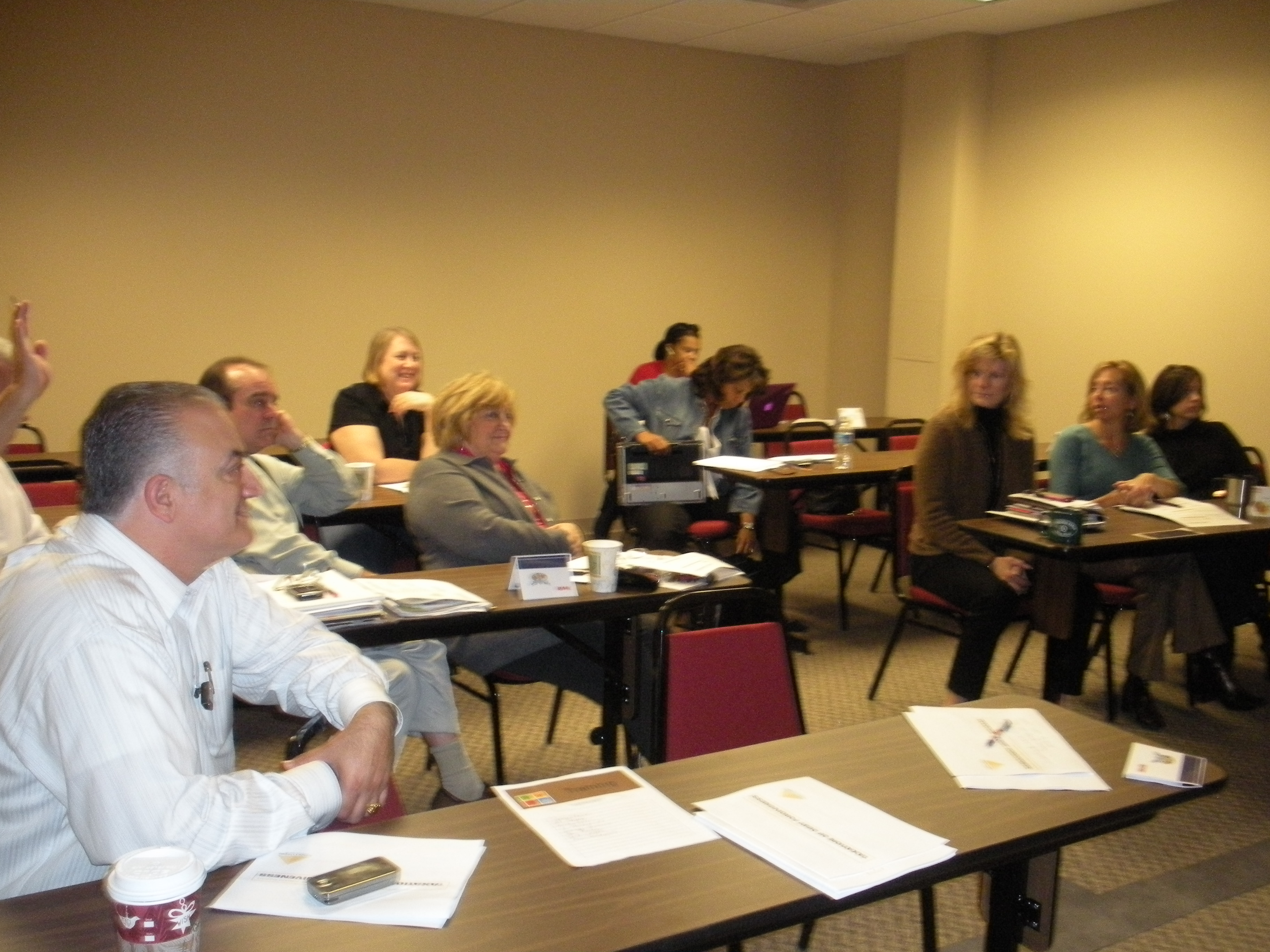
Wow!  Lots of great info was shared today at training
– numbers, top ten questions ready to be answered, short sales in any market
and then Aronson & Company notes on taxation of debt forgiveness.


Numbers (in Northern Virginia)


  • Active (Sales)                                      5414
  • Vacant                                                 1597
  • % of Market                                         29.5%
  • Month Supply (For Sale)                      1.8
  • Month Supply (For Rent)                     2.2
  • Month Supply Sold                              2.1


Top Ten Questions – ready
to be answered!


  1. Is the housing market getting better?
  2. When will housing bottom out?
  3. What signals should I watch to determine
    whether my local market is improving?
  4. How can I figure out the value of my home?
  5. Does it matter whether I’m ‘under water’?
  6. If I lose my home to foreclosure, how long
    will it take to repair my credit record?
  7. If I’m renting, is now a good time to buy a
    house?
  8. Can I get a tax credit if I buy a home now?
  9. Can I get a mortgage on attractive terms?
  10. Should I invest in foreclosed homes?


Aronson & Company
Notes


·       
Cancellation
of debt is a taxable event

·       
Bankruptcy
does protect from tax liability from a tax liability that occurred prior to
bankruptcy.

·       
Deed in Lieu
of Foreclosure – similar to short sale – selling to third party with bank’s
approval. 

·       
Loan
Modifications can also result in cancellation of debt and the modifier may
receive a 1099 from the lender – be aware this is could possibly happen!

·       
The discharge
of acquisition debt secured by the taxpayer’s principal residence is excluded
from income up to $2,000,000 until December 31, 2012.  This date is subject to change.


For a complete chart of
the implications of the Taxation of Debt Forgiveness handout we received call
or email me and we will get it to you. 
As is always the case – you learn more by listening, taking notes and
reading the materials than you do by reading my synopsis – get to training
yourself to internalize it more!  Get
it?  Got it?  Good!


Now, go sell something!

Determine Your Good to Great Moment!

Our Accelerent meeting
featured another outstanding speaker
Don Yaeger
– the former editor of Sports
Illustrated
.  In over
hundreds of
interviews and encounters with athletes over the 
years he developed his 16
Consistent Characteristics of
Greatness.

Don-headshot_web


Qualities that those who
demonstrate greatness possess

  • Hate losing more then love winning
  • No excuses. 
    Excuses keep you from going from good to great.  Basically make it happen.  Determine
    what is your good to great moment!


Three themes of Greatness

  1. Greatness is a process – no one is born
    great.  You must work at it
    consistently and persistently.
  2. Not one single characteristic requires
    physical skills; you must be mentally, emotionally and spiritually
    disciplined.
  3. Great ones understand they are not perfect – they
    must continually work to get it done.


Other
thoughts that were shared

  • Get help if you need it – never too big never
    too small.
  • Something will happen that will affect your
    life – it is destine to happen – will you be better or bitter?  Use adversity as the fuel to motivate
    yourself – this is your inner fire! 
  • Value education


If you can’t change the people
around you, change the people you are around – seek to get better!


Determine what you will
get out of every situation you are in – yearn to learn! 


So here are the 16 Consistent Characteristics of Greatness


How They Think

  1. It’s Personal – They hate to lose more then
    they love to win.
  2. Rubbing Elbows – They understand the value of
    association.
  3. Believe – They have faith in a higher power.
  4. Contagious Enthusiasm – They are positive
    thinkers…They are enthusiastic…and that enthusiasm rubs off. 


How They Prepare

  1. Hope for the Best, But…They prepare for all
    possibilities before they step on the field.
  2. What Off-Season?  They are always working towards the next
    game…The goal is what’s ahead, and there’s always something ahead.
  3. Visualize Victory – They see victory before the
    game begins
  4. Inner Fire – They use adversity as fuel


How They Work

  1. Ice in Their Veins – They are risk-takers and
    don’t fear making a mistake.
  2. When All Else Fails – They know how and when to adjust their game plan.
  3. Ultimate Teammate – They will assume whatever
    role is necessary for the team to win.
  4. Not Just About the Benjamins – They don’t play
    just for the money.


How They Live

  1. Do Unto Others – They know character is
    defined by how they treat those who cannot help them.
  2. When no one is watching – They are comfortable
    in the mirror…They live their life with integrity.
  3. When Everyone is Watching – They embrace the
    idea of being a role model.
  4. Records are Made to be Broken – They know
    their legacy isn’t what they did on the field.  They are well-rounded. 

November Listing Exchange

Listing Exchange 004

We are experiencing short sale success!  One agent got a short sale approved with
clients being current on their mortgage, another one was approved in 3.5 weeks,
many are being approved with the commission negotiated with the sellers, and
one agent got one approved while sitting in the exchange – 6 months after
submission but it was still approved. 
Bank of America is now retaining the right to pursue a deficiency
judgment and letting the seller know that the MI Company may also pursue the
deficiency.  More banks may follow suit –
stay tuned!

Inventory is dropping all over Northern Virginia and the
market continues to be extremely price sensitive.  A home was listed at $275,000 received 3
contracts and the price was escalated up to $300,000 and appraised close to the
sales price.  As luck would have it, the
loan was denied due to fraudulent tax returns being submitted.  Property was relisted for $300,000 because of
the appraisal and 27 showings occurred with no contracts in 2.5 weeks so price
was reduced to $275,000 and two offers are coming in – price properties
correctly and they will sell.

At a recent Buffini
conference he noted:  in 2010 be a Go
Getter or be a Go Goner;   Be a stay
puter and be a bankrupter;  be a do
nothinger and be an out of the businesser! 
What are you going to be next year?

4 million foreclosures expected in 2010 – filings are
slowing down after 6 consecutive months of increases in foreclosure filings.        

Rates are at near low rates for the year.  MBS being purchased by the government will
stop in March – what will happen to rates? 
Who will be a buyer of mortgages at that time?  Right now, we are in a high 4’s market will
probably be in a high 5’s market now.  Again,
now is the time to buy a house!

FHA has reserves of .5% because of demand on their
insurance…what will happen?  Will we need
higher down payments?  Will upfront
mortgage insurance be higher?

In a recent survey of buyers, they felt that on a scale of 1
– 10, 10 being difficult to obtain a loan, getting a loan today ranks as an
8.1.  Lenders are requiring more
paperwork, analyzing loans more and are more difficult to get through.

As most of us know, the tax credit has been
extended…but most REALTOR’s and lenders are not explaining it correctly.  Take advantage of the opportunity and explain
it to your clients and ask for new business!

Upcoming events:

Food Bank ends Friday – please contribute

December 4th is our Quarterly meeting featuring
Dave Stevens – please register!

Breakfast with Santa is December 5th in the
Chantilly office – invite all of your clients!

At our events, the education is great, the food is plentiful
and the networking is awesome – you need to attend.  Get it? 
Got it?  Good!

Now go sell
something!